Agents that Matter examines the actors and structures that facilitate knowledge transfer between research, policy, and practice in Switzerland’s highly decentralised education system. The project focuses on political decision-makers, education influencers, and pedagogical ICT support (PICTS). The findings inform the development of a context-sensitive transfer strategy for the DEEP consortium.
Accompanying Research Project of the Coordination Office on Knowledge Transfer, Context, and Boundary-Spanning Actors
Accompanying Research on Digital Transformation in Switzerland’s Federal Education System
Digital transformation in schools is increasingly understood as a comprehensive transformation process that encompasses organisational development, teaching and learning, staff development, and collaboration. For research findings to have an impact within this process, actors are needed who mediate between research, policy, and practice – so-called boundary-spanning actors.
Agents that Matter is an accompanying research project conducted at the level of the DEEP Coordination Office. The project examines which actors are relevant to digital transformation within Switzerland’s highly decentralised education system – with its four language regions, 26 cantons, and approximately 2,100 municipalities – which conditions facilitate or hinder their effectiveness, and how these insights can inform a context-sensitive knowledge transfer strategy for the consortium.
Three Sub-Studies
Sub-study 1 – Political decision-makers: Semi-structured interviews with representatives of education authorities and professional associations identify key factors influencing the different contextual levels as well as boundary-spanning actors operating across contexts.
Sub-study 2 – Education influencers: A qualitative content analysis of self-descriptions on Instagram and LinkedIn examines which topics education influencers communicate to their followers and the role social media communities play in networking and knowledge exchange within the education sector.
Sub-study 3 – Pedagogical ICT Support (PICTS): Semi-structured interviews with PICTS professionals from different German-speaking cantons explore their role as knowledge brokers between digital transformation and school development, as well as the importance of professional and informal networks for knowledge acquisition.
The findings show that research-to-practice transfer depends less on individual actors than on the structures in which they are embedded, such as cantonal professional networks or communities of practice. These findings provide the basis for principles for a context-sensitive transfer strategy for the consortium: diversified transfer formats, co-design with boundary-spanning actors, the use of contextual knowledge, and the targeted development of network infrastructures such as Networked Improvement Communities (NICs).
An article presenting the findings of the second sub-study will be published shortly:
Between Lifestyle, Education Policy, and a New Culture of Sharing – The Role of Swiss Education Influencers on Social Media (in press).
Further articles are in preparation.
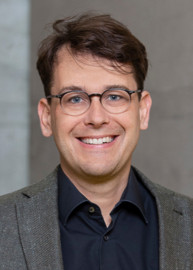
Prof. Dr. Michael Geiss
PHZH
Project Leader

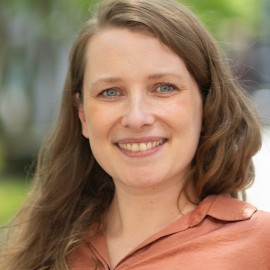
Dr. Lea Braun
PHZH
Researcher


Info
After studying linguistics and communication sciences as well as migration and media education in Marburg and Cologne, Lea was a research assistant in the working group for media education and media didactics at the University of Cologne. From 2019-2024, she was project leader for digital learning media at Lehrmittelverlag Zürich (LMVZ), where she oversaw the digitalization of teaching materials for science subjects as well as for media and computer science. She was also responsible for the development of new teaching materials for English at primary level.

Dr. Dominique Krebs-Oesch
PHZH
Researcher

Info
After training as a primary school teacher at PH FHNW, Dominique immediately went on to study educational science at University of Zurich. Her PhD work focused on institutional permeability in structured education systems and educational inequalities. She has worked on major transition-related studies (TRANSITION (PHZH), TIDES (PH FHNW), TREE (UNIBE)) with a focus on the coordination of online questionnaires (survey management) and project communication. In the infrastructure project TREE, she also played a leading role in the digitisation of performance tests in survey settings and the publication of such data.