Provide teachers with guidelines, training and resources to make the MaMa platform materials, aimed at teaching mathematics in elementary school, more inclusive. By studying how teachers differentiate the platform materials and what their strengths and needs are, the researchers intend to apply the UDL approach to ensure that every child learns mathematics.
MaPEPE (MaMa Platform for Equity in Primary Education) investigates how MaMa – Matematica per la scuola elementare, an existing digital platform for primary mathematics education,, an existing digital platform for primary mathematics education, can become a lever for more equitable and inclusive teaching practices in Canton Ticino. The project builds on a documented tension in the literature: on the one hand, teachers are expected to differentiate instruction and integrate digital tools; on the other hand, they report a lack of time, guidance and design support to adapt resources to the diverse needs, interests and learning profiles of their pupils. MaPEPE aims at providing teachers with guidelines and training courses to make MaMa’s materials more responsive to learner diversity. By studying how teachers differentiate these materials and what their strengths and needs are, the researchers intend to apply the UDL approach to ensure that every child learns mathematics.
The project is situated at the intersection of special pedagogy and mathematics education. UDL provides the main framework for thinking about inclusion, emphasising the need to plan for variability from the outset by offering multiple means of representation, action and expression, and engagement. At the same time, the project team aims to work on “second generation didactic engineering” (Perrin-Glorian & Bellemain, 2019; Sbaragli & Panero, 2024), which conceptualises high-quality teaching resources as dynamic artefacts that evolve through teachers’ use and that can foster professional learning. Within this theoretical space, our research questions address which UDL principles are already enacted when teachers work with MaMa tasks, which barriers they encounter when trying to differentiate, and what forms of support they perceive as most relevant for designing accessible mathematical learning trajectories.
MaPEPE adopts a mixed-methods approach. A convenience sample of primary teachers in Ticino, including classroom teachers, special needs teachers and support teachers, participate in the study. Through questionnaires and semi-structured interviews, the researchers document how teachers select, adapt and sequence activities for heterogeneous classes and for specific pupils. The empirical analysis allows the team to identify recurring differentiation strategies, typical breakdowns, and the UDL checkpoints that are implicitly or explicitly mobilised in these practices.
Building on these findings guidelines and teacher training courses are being designed in which participants experiment with UDL-informed adaptations, share classroom experiences and reflect on the impact on students’ participation and learning in mathematics. In the medium term, the researchers expect the project to generate knowledge on how digital resource systems can be engineered and accompanied to promote equity, and to offer schools and teacher educators concrete tools for sustaining inclusive mathematics teaching beyond the lifespan of the project.
Literature
Meyer, A., Rose, D. H., & Gordon, D. T. (2014). Universal design for learning: Theory and practice. CAST Professional Publishing.
Perrin-Glorian, M.-J., & Bellemain, P. M. B. (2019). L'ingénierie didactique entre recherche et ressource pour l'enseignement et la formation des maîtres. Caminhos da Educação Matemática em Revista - Terias e metodos em didactica da matematica, 9(1), 45–82. https://hal.science/hal-03523253
Sbaragli, S., & Panero, M. (2024). Didactical Materials Customizable to Suit Classroom Needs: A Valuable Resource for Teachers. Education Sciences, 14(5), 449. https://doi.org/10.3390/educsci14050449
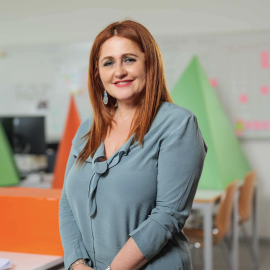
Prof. Dr. Silvia Sbaragli
SUPSI
Project Leader


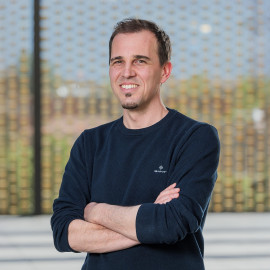
Prof. Dr. Lucio Negrini
SUPSI
Project Leader

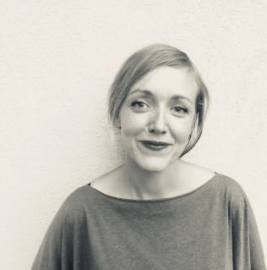
Laura Rusconi
SUPSI
Researcher
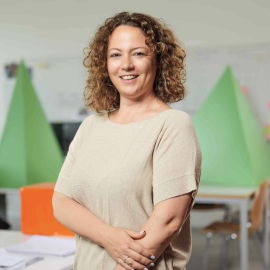
Elena Franchini
SUPSI
Researcher
Dr. Marzia Garzetti
SUPSI
Researcher

Luca Crivelli
DECS
Expert Teacher