The translational resource on teaching strategies investigates how findings from the DEEP projects can be made usable for designing diverse and digitally enriched learning environments. It focuses on reflection-oriented and practice-relevant support for teachers and explores the formats and points of connection through which such resources can be sustainably embedded in classroom practice and teacher professional development.
Coordination Office translational resource on teaching strategies, heterogeneous learning groups, and digital participation
Teaching Strategies: Bridging Research and Classroom Practice
School classes are diverse: students bring different levels of prior knowledge, language backgrounds, and learning paces to the classroom. At the same time, digitalisation is changing the conditions of teaching and learning. Different tasks, learning pathways and materials, as well as digital and analogue learning environments, open up new possibilities but can also increase the complexity of teaching. This raises an important question: How can teaching be designed and communicated in ways that help students navigate and find orientation within complex learning environments?
The Teaching Strategies transfer project investigates which teaching strategies can support teachers in creating diverse and digitally enriched learning environments that are comprehensible and conducive to learning. The project builds on findings from the DEEP projects as well as conversations with teachers. Among other aspects, it explores how learning objectives, learning pathways, tasks and support options can be structured and communicated in ways that are transparent and comprehensible to students.
The project aims to consolidate findings from DEEP and investigate which specific and overarching teaching strategies can be derived from them and transferred across different classes, subjects and school contexts. As a first step, the resulting resources are intended to encourage teachers to reflect on their own teaching practices and consider them from different perspectives. Building on this reflection, materials, tools and teaching ideas are developed to provide concrete possibilities for classroom practice. Initial conversations with teachers indicate a particular need for practice-tested resources that require manageable levels of preparation and can be flexibly adapted to different teaching situations.
At the same time, the project addresses the broader question of how, when and at which points research-based knowledge and support can meaningfully connect with educational practice. Teaching Strategies therefore investigates both suitable professional development and support formats and potential points of connection through which these resources can reach teachers and stimulate processes of reflection and development. Particular attention is given to short and flexible formats that can be readily integrated into everyday school life and existing structures of teacher professional development.
Methodologically, the project is guided by Design-Based Research (DBR). The approaches and resources developed within the project are designed, tested, reflected upon and refined through iterative cycles. This process brings together different perspectives, particularly those of teachers and experts in teacher professional development. In this way, research findings from the DEEP projects are translated, together with practitioners, into reflection-oriented, accessible and practice-relevant resources for teaching in the context of digital transformation.
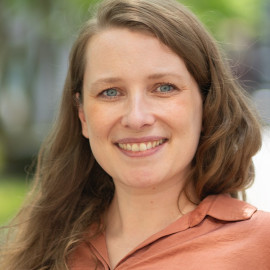
Dr. Lea Braun
PHZH
Project Lead


Info
After studying linguistics and communication sciences as well as migration and media education in Marburg and Cologne, Lea was a research assistant in the working group for media education and media didactics at the University of Cologne. From 2019-2024, she was project leader for digital learning media at Lehrmittelverlag Zürich (LMVZ), where she oversaw the digitalization of teaching materials for science subjects as well as for media and computer science. She was also responsible for the development of new teaching materials for English at primary level.

Maria Görlich
PHZH
Project Member

Anna Janka
PHZH
Project Member
